A bridge may look stable during an annual inspection, but its loads, vibration levels, and surrounding conditions change every day. Engineers need reliable information about those changes to identify risks and plan maintenance. This is where a digital twin in infrastructure becomes valuable.
A digital twin connects a virtual representation of a physical asset with information about its condition and performance. It helps infrastructure owners monitor changes, investigate potential problems, and evaluate decisions before committing resources.
By combining engineering models, asset records, and operational data, digital twins can support better maintenance planning, risk assessment, and infrastructure management.
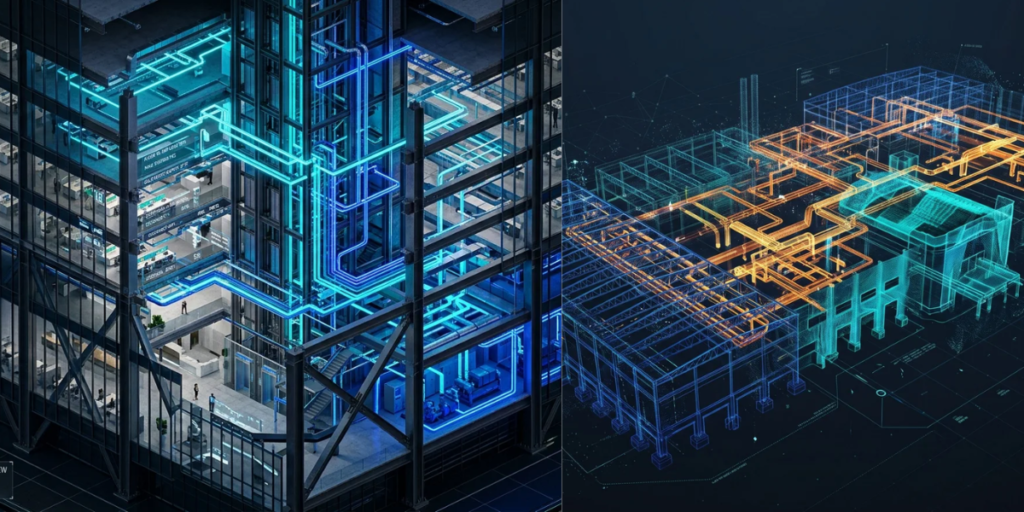 Building Information Modeling (BIM) provides structured digital information about an asset’s design, construction, and components.
An infrastructure digital twin connects an asset representation with changing operational information to help teams understand performance over time.
A BIM model may contain accurate equipment locations, pipe dimensions, material specifications, and structural details. However, that information alone does not show whether a pump is overheating or a monitored bridge component is experiencing an unusual load.
A digital twin can link asset information with relevant measurements, analysis, and maintenance activity.
BIM can therefore provide a valuable foundation for a digital twin, but it is not always required.
Some infrastructure digital twins use GIS information, asset registers, engineering calculations, and monitoring data without a detailed 3D BIM model.
Professional BIM modeling and digital twin services can help organizations prepare structured asset information and coordinate the data needed for future operational applications.
Key takeaway: BIM and digital twins serve related purposes. The distinction lies in how asset information connects with operational conditions and supports decisions.
 A digital twin works through a connected process: collecting information from the physical asset, organizing it within a digital representation, analyzing changes, and using the findings to guide decisions.
Four main layers support this process.
 The value of digital twin technology in infrastructure depends on the quality of the data and the decisions it supports.
Five benefits are particularly relevant to infrastructure owners and engineering teams.
 Digital twin technology in construction and civil engineering can support several infrastructure categories.
The most useful application depends on the asset’s operating conditions, available records, and management objectives.
 Start with one infrastructure asset and one clearly defined operational goal.
For example, a bridge owner may want to improve how engineers identify components requiring additional inspection. A water facility may want to determine whether equipment monitoring can support maintenance scheduling.
A practical implementation plan includes five steps.
What Is a Digital Twin in Infrastructure?
A digital twin in infrastructure is a virtual representation of a physical asset, system, or network that connects relevant engineering information with real-world data. It can combine 3D geometry, equipment records, sensor measurements, inspection findings, and analytical models to support infrastructure monitoring and decision-making. Consider a railway bridge. Engineers may connect a structural model to temperature and strain sensors, inspection reports, and maintenance records. By comparing current readings with historical patterns, they can identify unusual conditions and determine whether further investigation is necessary. The essential feature is synchronization between the physical asset and its digital representation. According to the Digital Twin Consortium, a digital twin uses synchronized interactions at a frequency and level of detail appropriate to its purpose. That does not mean every infrastructure digital twin needs continuous sensor readings. Some systems require near-real-time monitoring, while others may use scheduled measurements, inspections, or survey updates. The required update frequency depends on the asset, the decisions being supported, and the consequences of working with outdated information. For example, a bridge monitoring system may require frequent readings of critical structural behavior. A drainage network may rely on rainfall measurements, periodic surveys, and hydraulic modeling. In either case, the information must remain accurate, traceable, and linked to the correct asset.Digital Twin vs BIM: What Is the Difference?
Building Information Modeling (BIM) provides structured digital information about an asset’s design, construction, and components.
An infrastructure digital twin connects an asset representation with changing operational information to help teams understand performance over time.
A BIM model may contain accurate equipment locations, pipe dimensions, material specifications, and structural details. However, that information alone does not show whether a pump is overheating or a monitored bridge component is experiencing an unusual load.
A digital twin can link asset information with relevant measurements, analysis, and maintenance activity.
BIM can therefore provide a valuable foundation for a digital twin, but it is not always required.
Some infrastructure digital twins use GIS information, asset registers, engineering calculations, and monitoring data without a detailed 3D BIM model.
Professional BIM modeling and digital twin services can help organizations prepare structured asset information and coordinate the data needed for future operational applications.
BIM vs. Digital Twin Comparison
| Comparison Factor | Building Information Modeling (BIM) | Digital Twin |
|---|---|---|
| Primary purpose | Manage structured design, construction, and asset information | Support decisions using synchronized asset information |
| Data sources | Design models, drawings, specifications, and asset records | Asset records, monitoring data, inspections, and analytical models |
| Update frequency | Updated during design, construction, or asset management activities | Synchronized at intervals appropriate to the use case |
| Main users | Designers, engineers, contractors, and asset information teams | Asset owners, operators, engineers, and maintenance teams |
| Analysis | Design coordination, clash detection, quantities, and construction planning | Condition monitoring, scenario testing, and operational analysis |
| Lifecycle value | Supports information management and project handover | Supports ongoing asset management and operational decisions |
| Relationship | Can provide the information foundation for a digital twin | May incorporate BIM, GIS, or other asset representations |
How Does a Digital Twin in Infrastructure Work?
A digital twin works through a connected process: collecting information from the physical asset, organizing it within a digital representation, analyzing changes, and using the findings to guide decisions.
Four main layers support this process.
1. Physical Assets and Monitoring Devices
The process begins with a physical asset, such as a bridge, tunnel, highway, building, or utility network. Depending on the application, monitoring devices may collect:- Structural strain and vibration measurements
- Temperature and pressure readings
- Traffic volumes and loading conditions
- Energy consumption and equipment performance
- Water levels, rainfall, and flow rates
- Drone imagery, laser scans, and inspection observations
2. Data Collection and Integration
Collected information needs to be associated with the correct physical asset and its individual components. For example, a vibration reading from one bridge support must be linked to that specific support rather than another structural element. Data platforms may connect monitoring information with BIM models, CAD drawings, GIS records, inspection reports, and maintenance databases. Consistent asset identifiers, reliable timestamps, and documented measurement locations help prevent errors. Without this information, engineers may struggle to determine whether an unusual reading represents a real asset condition, a sensor problem, or incorrectly mapped data.3. Digital Modeling and Analysis
A digital model places measurements within the asset’s engineering context. Engineers can compare current readings with historical information, apply threshold rules, and investigate changes that may require attention. Depending on the project, simulations can examine possible conditions such as increased traffic loads, heavier rainfall, or changes in equipment operation. AI and machine learning can determine patterns in infrastructure data, provided the information is accurate, reliable, and sufficient for meaningful analysis. However, they are optional components, and their results require appropriate validation.4. Visual Dashboards and Engineering Decisions
Dashboards and reporting tools help operators review measurements, identify trends, and investigate alerts. The information may support decisions to:- Inspect a specific structural component.
- Adjust equipment operating conditions.
- Schedule preventive maintenance
- Review potential changes in asset performance.
- Update inspection priorities
Step-by-Step Digital Twin Workflow
Physical Asset → Data Collection → Data Integration → Digital Analysis → Engineering Decision → Asset Record Update- Monitor the asset: Collect relevant measurements, surveys, and inspection information.
- Connect the information: Map each dataset to the correct asset, component, and location.
- Analyze conditions: Compare observations with historical data, engineering assumptions, and defined thresholds.
- Review the findings: Qualified personnel assess alerts and determine whether action is required.
- Record the outcome: Document inspections, maintenance work, and model changes so the digital representation remains useful.
Key Benefits of Digital Twin Technology in Infrastructure
The value of digital twin technology in infrastructure depends on the quality of the data and the decisions it supports.
Five benefits are particularly relevant to infrastructure owners and engineering teams.
Predictive Maintenance and Earlier Fault Detection
Changes in strain, vibration, equipment temperature, or operating pressure may indicate developing problems. By reviewing trends over time, maintenance teams can investigate unusual behavior before a failure becomes evident. For example, a water treatment facility may use pump vibration and temperature readings to identify equipment that needs inspection. This can support condition-based maintenance planning, although alerts cannot establish the exact cause of a problem without further assessment.Better Asset and Lifecycle Management
Infrastructure assets can remain in operation for decades. Their records may pass between designers, contractors, owners, and maintenance providers. A digital twin can bring relevant design documents, equipment information, inspection findings, and maintenance history into a connected asset record. Teams can review previous repairs, equipment replacements, and modifications when planning future work. Clear records also reduce the time spent searching across disconnected systems for essential information.Safer Risk and Scenario Simulations
Engineers can use analytical models to examine possible operating conditions without deliberately placing additional stress on the physical asset. Examples include:- Assessing bridge responses to increased traffic loads
- Evaluating drainage performance during heavy rainfall
- Investigating equipment behavior under different operating demands
- Reviewing possible infrastructure responses to extreme weather
Cost and Resource Optimization
Condition information can help infrastructure owners prioritize inspections, maintenance activities, and equipment upgrades. For example, operators at a water facility might compare pump performance, flow rates, and energy consumption to investigate inefficient operating conditions. This information can guide maintenance planning and identify potential opportunities to reduce unnecessary resource use. However, financial benefits must be assessed against sensor installation, software, integration, cybersecurity, and ongoing data management costs.Clearer Coordination Between Technical Teams
Engineers, contractors, maintenance personnel, and asset owners often work with separate records. Shared asset identifiers and connected information help teams investigate the same component and understand its maintenance history. This can improve handovers, simplify technical discussions, and reduce confusion when planning inspections or modifications.Applications of Digital Twins in Civil Engineering and Infrastructure
Digital twin technology in construction and civil engineering can support several infrastructure categories.
The most useful application depends on the asset’s operating conditions, available records, and management objectives.
Transportation Networks: Bridges, Tunnels, and Highways
Digital twins can support transportation infrastructure monitoring and maintenance planning. Bridge engineers may connect structural models with strain, vibration, and temperature readings to investigate abnormal changes. Tunnel operators can analyze ventilation equipment, environmental conditions, and maintenance information. Highway authorities may combine pavement surveys, traffic information, and maintenance records to prioritize investigations and repairs. These applications help teams identify where inspections or interventions may be needed.Smart Cities and Urban Planning
City authorities manage interconnected roads, drainage systems, utilities, and public facilities. A digital representation of these systems can help planners examine relationships between infrastructure components and evaluate proposed changes. For example, a drainage model may combine rainfall information, terrain elevation, and pipe network characteristics to investigate flooding risks. A useful starting point is one well-defined system or district rather than an extensive citywide model.Energy, Water, and Utility Infrastructure
Utility operators collect large amounts of information about equipment performance and network conditions. A digital twin may connect these measurements with asset records and operational models. Examples include:- Monitoring equipment temperatures within electrical substations
- Reviewing water pressure and flow patterns across distribution networks
- Investigating pump performance at treatment facilities
- Assessing equipment maintenance requirements using operating data
Construction Progress and Facility Management
Project teams can compare construction records, site surveys, and drone imagery with design models to investigate differences between planned and completed work. After handover, facility managers may connect equipment records with energy consumption, HVAC operating data, and maintenance schedules. Information prepared through BIM coordination services can support this transition by preserving component information and reducing gaps in asset documentation. Organizations planning new assets can also consider how their civil and infrastructure engineering information will support future inspections and maintenance.What Makes an Infrastructure Digital Twin Reliable?
An infrastructure digital twin must connect accurate information with the correct asset components. One common challenge is inconsistent identification. For example, a sensor may use one equipment tag, a BIM model another, and a maintenance system a third. If these identifiers are not aligned, operators may interpret measurements incorrectly or review the wrong component. Before developing a digital twin, engineering teams should answer five questions:- What decision must the digital twin support? Define a clear operational or maintenance objective.
- How will assets be identified? Use consistent identifiers across models, sensors, and maintenance records.
- How will measurements be verified? Establish data quality checks, calibration procedures, and acceptable update intervals.
- Who will maintain the information? Assign responsibility for updating asset records, model assumptions, and monitoring systems.
- What happens when an alert appears? Define escalation procedures, inspection responsibilities, and decision-making authority.
How to Start a Digital Twin Project
Start with one infrastructure asset and one clearly defined operational goal.
For example, a bridge owner may want to improve how engineers identify components requiring additional inspection. A water facility may want to determine whether equipment monitoring can support maintenance scheduling.
A practical implementation plan includes five steps.
Step 1: Define the Operational Objective
Identify the decision the project should improve. Avoid starting with a technology purchase before establishing the expected use. Examples of useful objectives include reducing time spent locating asset records, identifying abnormal equipment behavior, or improving inspection prioritization.Step 2: Review Existing Engineering Information
Assess the available drawings, BIM models, CAD files, inspection records, and maintenance data. Identify missing information and determine whether existing asset identifiers are consistent. This review helps establish what additional data the project requires.Step 3: Select Data Sources and Update Intervals
Determine which measurements are necessary and how often they should be collected. Some assets require frequent sensor updates. Others may be adequately represented using scheduled inspections or surveys. Document the information sources, data quality requirements, and responsibility for reviewing measurements.Step 4: Develop and Test a Pilot
Connect a manageable number of assets or components to the required information sources. Test whether the model correctly identifies assets, displays relevant readings, and supports the intended decision. If external engineering outsourcing services contribute to model preparation or data coordination, clearly assign responsibilities for information delivery, quality checks, and future updates.Step 5: Measure Results and Refine the System
Set measurable success criteria before evaluating the pilot. Possible measures include:- Time required to locate an asset record
- Percentage of monitoring points linked to the correct components
- Time taken to investigate an alert
- Completeness of maintenance and inspection records
- Accuracy of data synchronization against defined requirements
Planning an Infrastructure Digital Twin Project?
The Tacton iSolutions provides BIM modeling, coordination, and civil engineering support for teams preparing structured infrastructure asset information.
Whether your project involves BIM model preparation, asset data organization, or engineering documentation, we can help you assess the information requirements and define a practical scope.